
History of Aruba: From Early Settlement to Modern Island Life
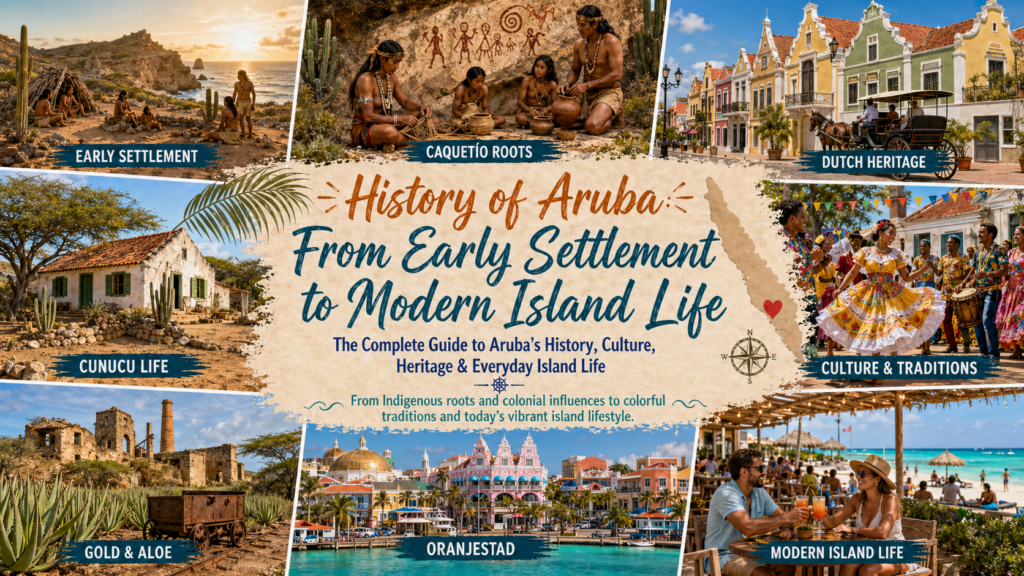
Aruba’s history is a fascinating blend of indigenous heritage, European influence, and global connections. Over centuries, the island has evolved from a quiet Caribbean outpost into one of the most stable, welcoming, and multicultural destinations in the region.
Understanding Aruba’s past adds depth to any visit, helping travelers appreciate not just its beaches, but also its culture, language, architecture, and way of life.
If you are planning your trip, you may also want to explore our Aruba Airport Transportation Guide, Best Beaches in Aruba, and One-Day Aruba Island Adventure guides.
Early History of Aruba
Aruba’s earliest known inhabitants were the Caquetío people, part of the Arawak family, who migrated from South America around 1000 AD. They lived in small communities, relying on fishing, hunting, and agriculture.
Evidence of their presence can still be found today in cave drawings and archaeological sites, particularly within areas like
Arikok National Park.
These early inhabitants developed a deep connection to the land and sea, shaping traditions that still influence Aruba’s cultural identity today.
Spanish Arrival
Aruba was first visited by Europeans in 1499 during Spanish exploration of the Caribbean. The Spanish claimed the island as part of their colonial empire, but unlike other Caribbean islands, Aruba did not have large gold reserves or fertile plantation land.
Because of this, Aruba was not heavily developed by Spain. Instead, it was used primarily for cattle raising and as a strategic outpost. Many indigenous inhabitants were relocated to other Spanish colonies during this period.
Dutch Rule
In 1636, the Dutch took control of Aruba during their conflicts with Spain. The island became part of the Dutch Caribbean and has remained connected to the Netherlands ever since.
Under Dutch rule, Aruba remained relatively quiet compared to other Caribbean colonies. It was not a major center for plantations, which meant it avoided some of the large-scale plantation systems seen elsewhere in the region.
Over time, Aruba developed a small but stable population with influences from Europe, Africa, and the Caribbean, laying the foundation for its diverse culture today.
Economic Development
Aruba’s economy began to change significantly in the 19th and 20th centuries.
Gold Industry
Gold was discovered in Aruba in the early 1800s, leading to a mining boom. Sites like
Bushiribana Gold Mill Ruins
still stand today as reminders of this period.
Oil Refining Era
In the 1920s, Aruba became an important hub for oil refining, thanks to its strategic location near Venezuela. The oil industry brought economic growth, infrastructure development, and an influx of workers from around the world.
This period played a major role in shaping Aruba’s multicultural society, as people from many different countries came to live and work on the island.
Tourism Growth
After the decline of the oil industry, Aruba transitioned into a tourism-based economy. Today, tourism is the island’s main economic driver, supported by its beaches, climate, safety, and welcoming culture.
Experience Aruba’s Culture and History
From historical landmarks to vibrant neighborhoods and cultural traditions, Aruba offers more than just beaches. Stay somewhere central so you can explore the island’s history, attractions, and local life with ease.
Status Aparte
A major milestone in Aruba’s modern history came in 1986, when the island achieved what is known as “Status Aparte.” This meant Aruba separated from the Netherlands Antilles and became its own constituent country within the Kingdom of the Netherlands.
This change gave Aruba greater control over its internal affairs while still maintaining ties with the Netherlands for defense and foreign policy.
Status Aparte marked the beginning of Aruba’s modern identity as a self-governing island with a strong focus on tourism, economic stability, and cultural preservation.
Aruba’s Multicultural Legacy
One of the most distinctive aspects of Aruba today is its multicultural identity. The island’s history of migration, trade, and economic development has created a society that blends influences from Europe, Africa, Latin America, and the Caribbean.
This diversity is reflected in:
- Languages, including Papiamento, Dutch, English, and Spanish
- Food and culinary traditions
- Music, festivals, and celebrations
- Architecture and local neighborhoods
Aruba’s welcoming culture and openness to visitors are direct results of this multicultural heritage.
How History Shapes Aruba Today
Aruba’s history has helped shape it into one of the most stable and visitor-friendly islands in the Caribbean. Its Dutch ties provide strong infrastructure and governance, while its multicultural roots create a warm and inclusive atmosphere.
Visitors today benefit from this combination, enjoying modern amenities alongside a rich cultural backdrop.
Discover More About Aruba
Learn more about Aruba’s beaches, attractions, culture, and travel tips to make the most of your visit.
Final Thoughts
Aruba’s history is a story of resilience, adaptation, and cultural blending. From its early indigenous roots to European influence, economic transformation, and modern independence, the island has developed a unique identity that continues to attract visitors from around the world.
Exploring Aruba is not just about enjoying its beaches—it is also about experiencing a place shaped by centuries of history and a truly global culture.
Ready to Experience Aruba for Yourself?
From rich history to beautiful beaches and vibrant culture, Aruba offers a unique Caribbean experience. Find the perfect place to stay and start planning your island getaway today.
FAQ About Aruba’s History
Who were the first people in Aruba?
The first inhabitants were the Caquetío people, part of the Arawak family, who came from South America.
When did Europeans arrive in Aruba?
Europeans first arrived in Aruba in 1499 during Spanish exploration.
When did Aruba become Dutch?
The Dutch took control of Aruba in 1636, and it remains part of the Kingdom of the Netherlands today.
What is Status Aparte?
Status Aparte refers to Aruba becoming a separate constituent country within the Kingdom of the Netherlands in 1986.
What makes Aruba multicultural?
Aruba’s multicultural identity comes from centuries of migration and global influence, resulting in a mix of languages, traditions, and cultures.